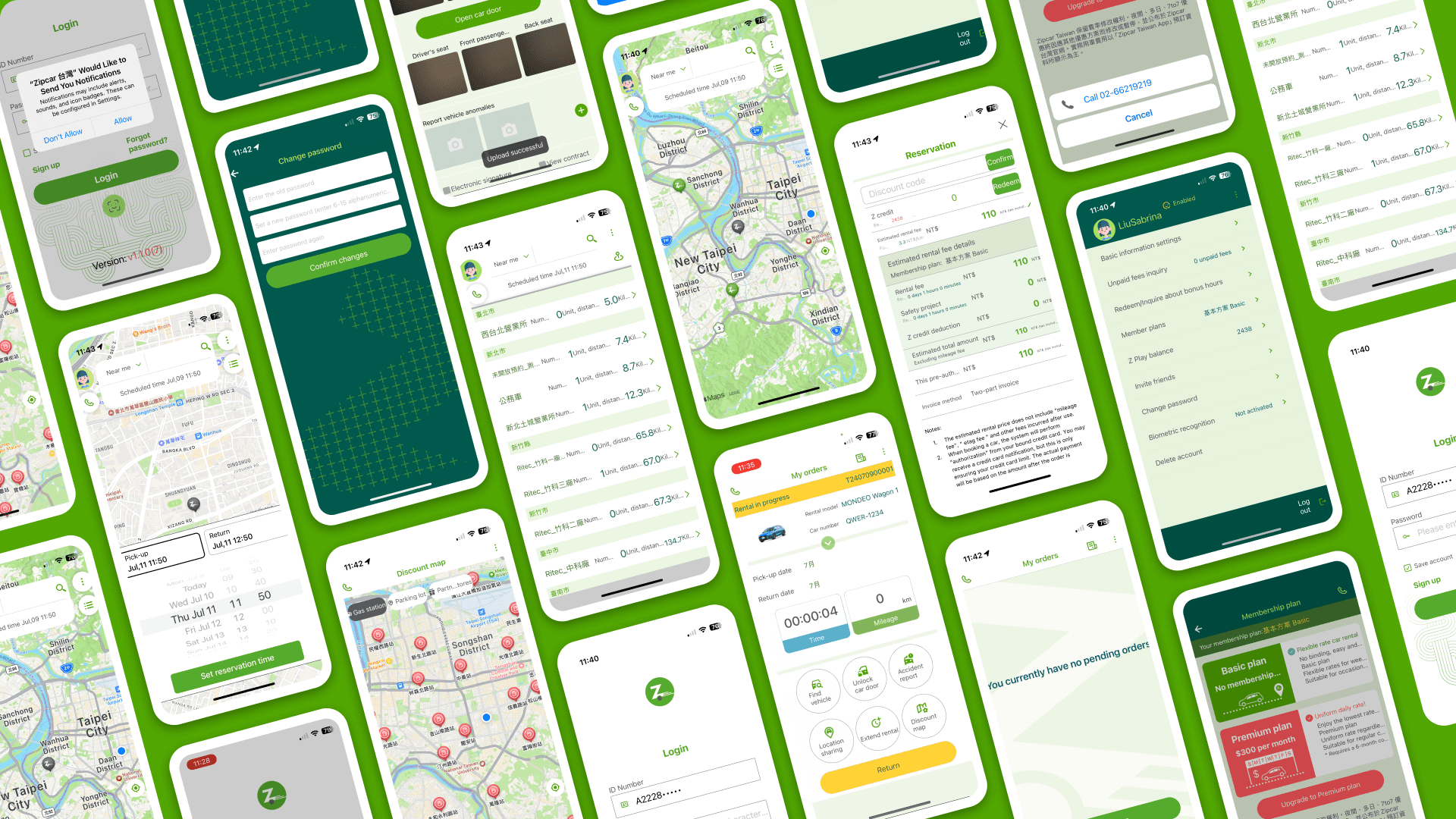
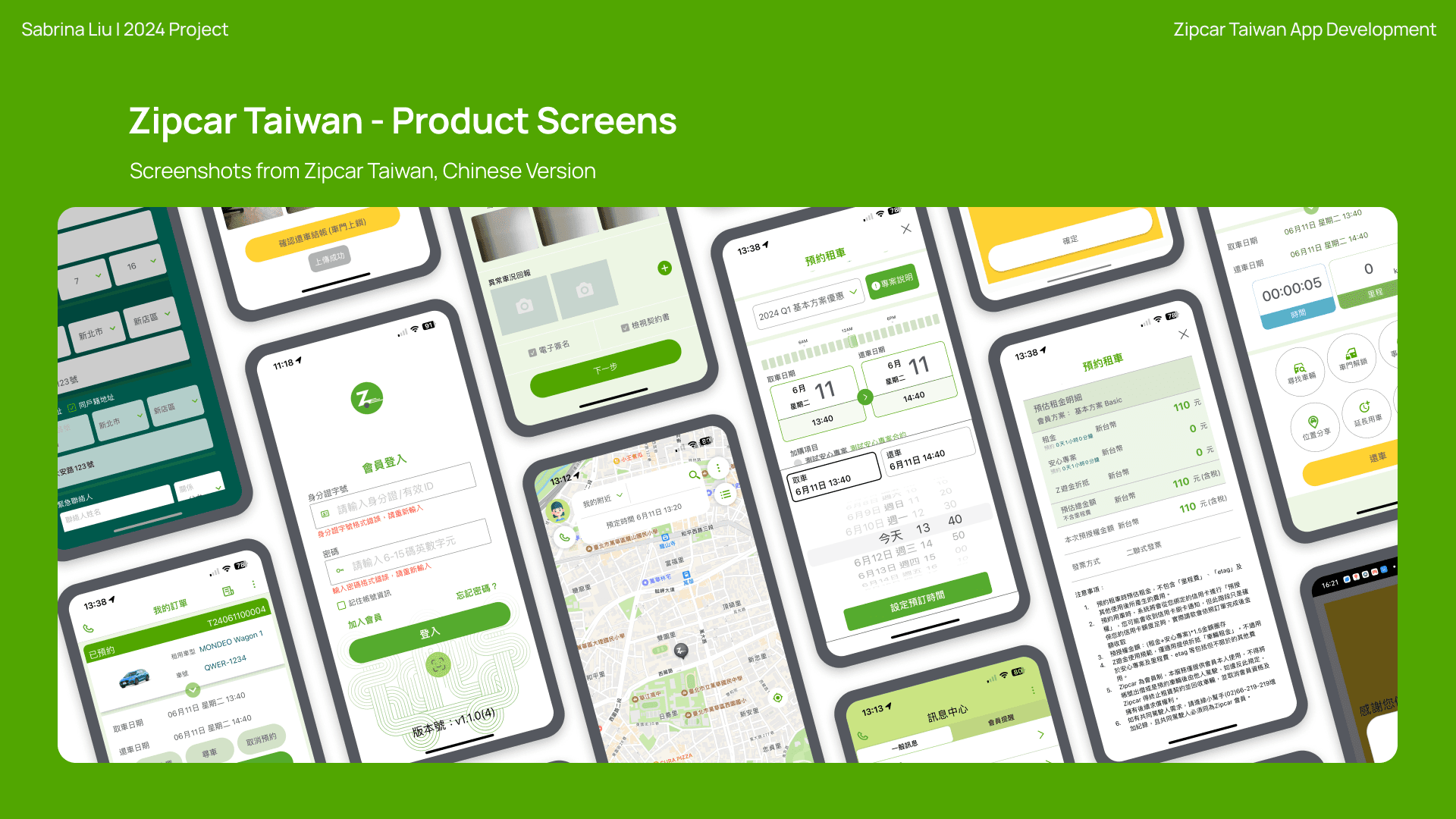
Zipcar Taiwan App Development
End-to-end PM for a 6-month cross-platform car-sharing app, from sprint planning to UX iteration.
Overview
This project focused on the development and enhancement of the Zipcar Taiwan mobile application, aiming to deliver a user-friendly, reliable, and scalable car-sharing experience for local users.
The project emphasized agile collaboration, cross-platform consistency, and continuous UX improvement driven by real user feedback.
Goal
Develop a user-friendly mobile app tailored to the Taiwan market
Ensure seamless integration with existing Zipcar systems
Improve overall user experience through intuitive UI/UX design
Establish a continuous feedback loop to guide product iteration and improvement
Role & Responsibilities
Agile Leadership
Planned and ran bi-weekly sprints Managed backlog prioritization by business impact Ensured on-time milestone delivery Facilitated retrospectives and velocity tracking
Stakeholder Coordination
Bridged internal teams and external clients Aligned FE and BE on API contracts and data flow Managed expectations with regular progress reports
UX Strategy
Designed multi-channel user research (survey, App Store, beta) Led cross-functional meetings to resolve UX ambiguities Translated insights into actionable product specs
Quality & Delivery
Collaborated with QA pipeline and bug triage Prioritized fixes by severity and user impact Maintained cross-platform consistency (iOS and Android)
Development Timeline
Planning
- ■Define project scope and objectives
- ■Initial meetings with clients to understand requirements
- ■Gather requirements and create project roadmap
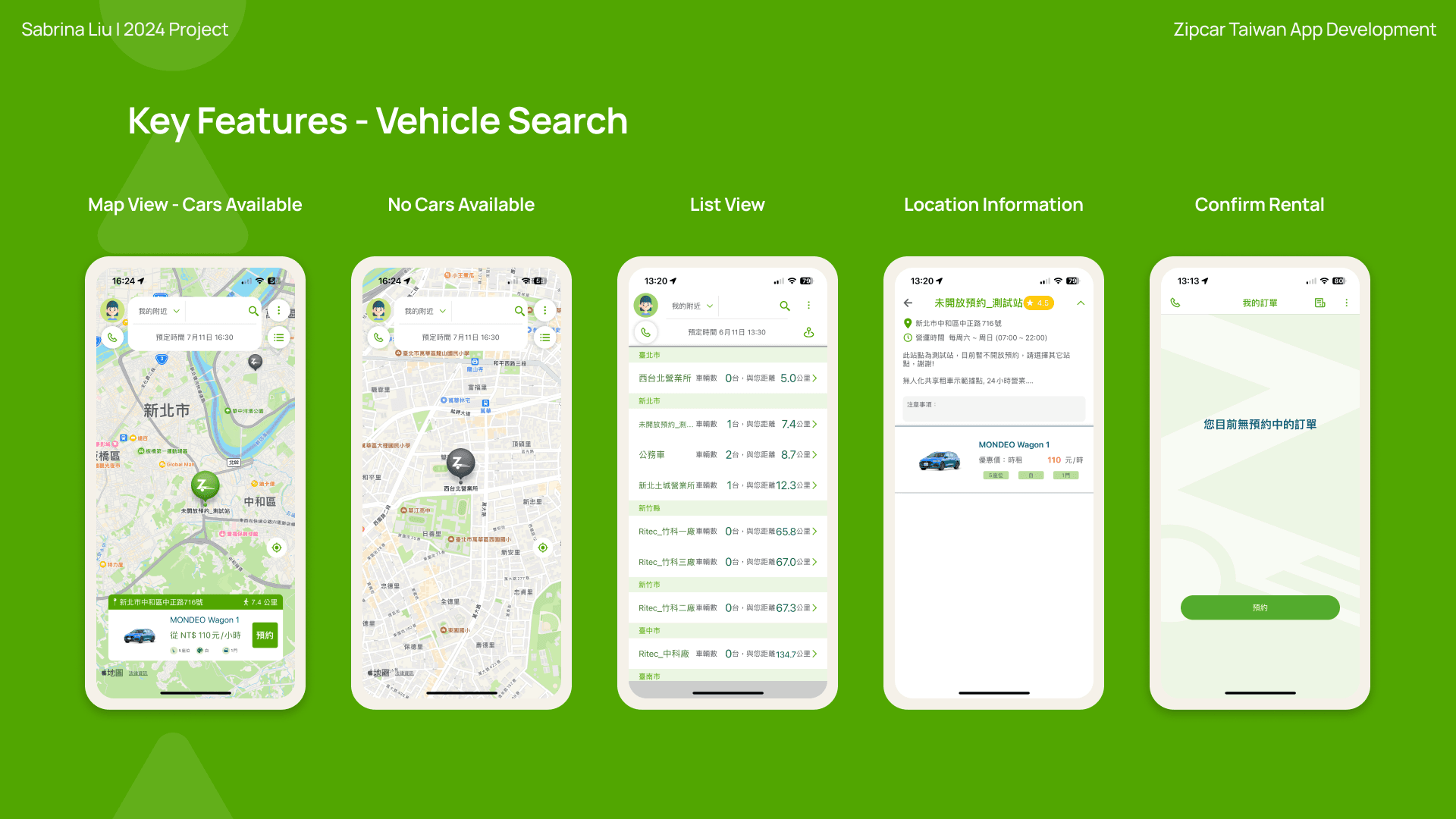
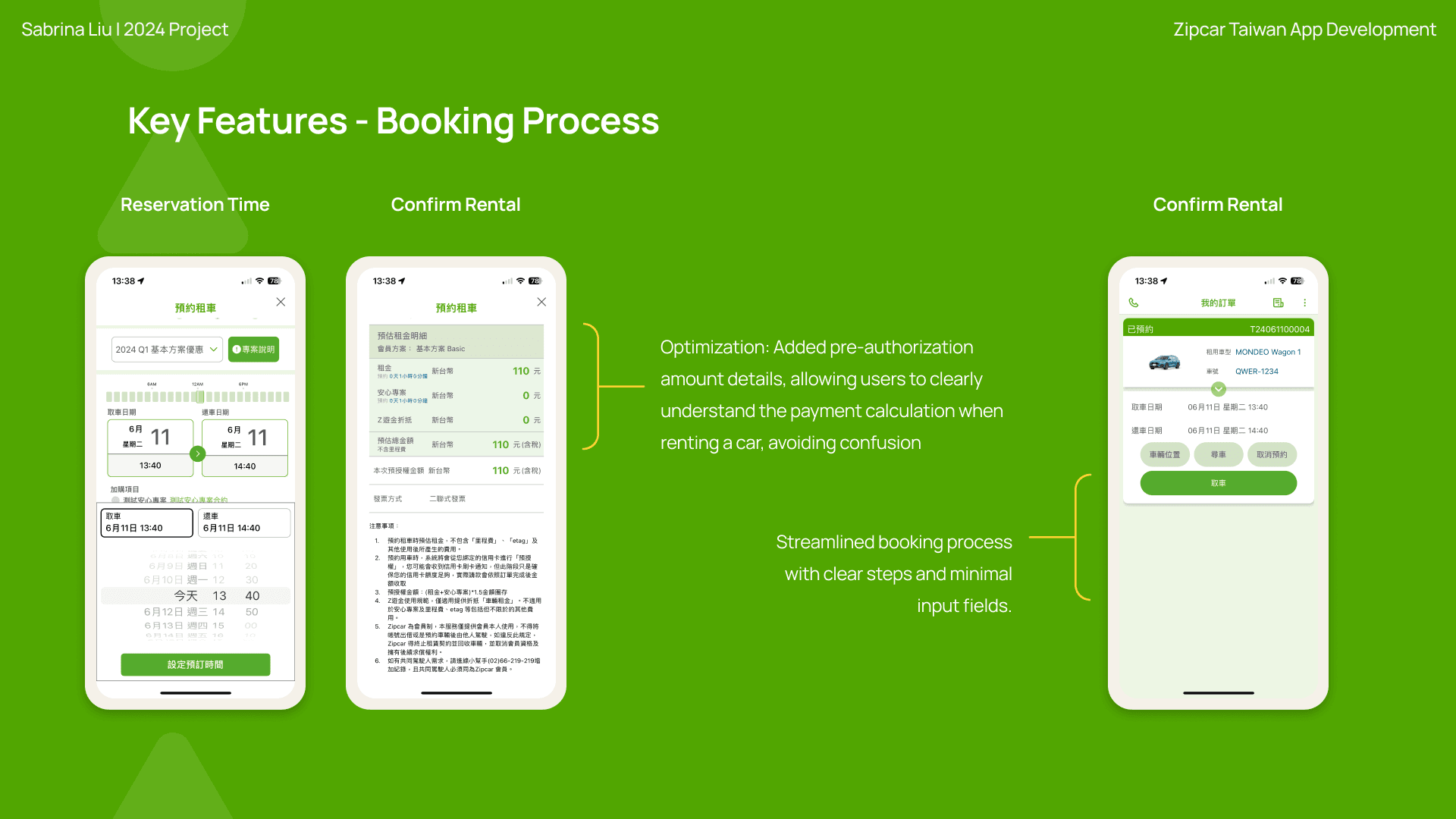
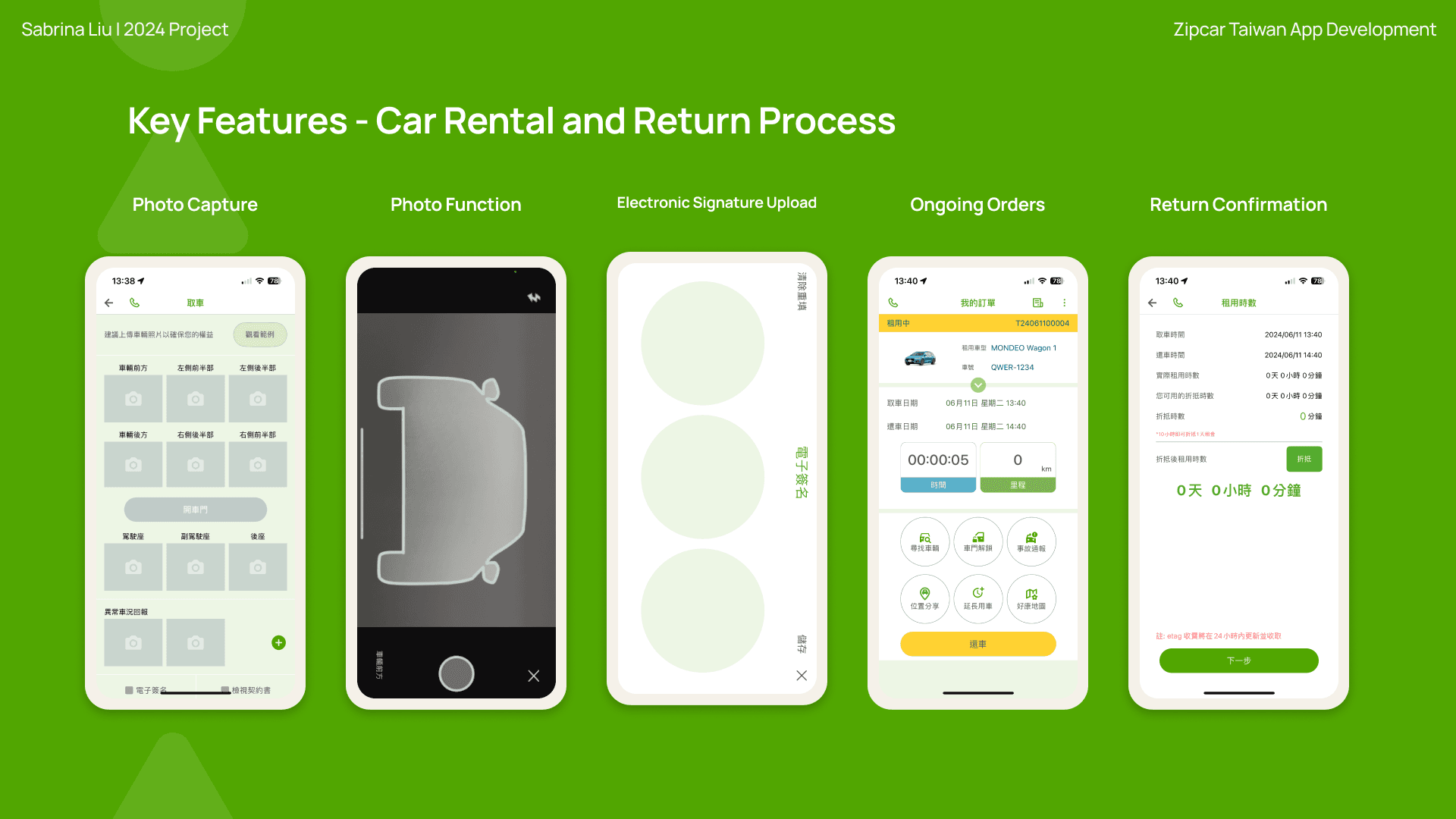
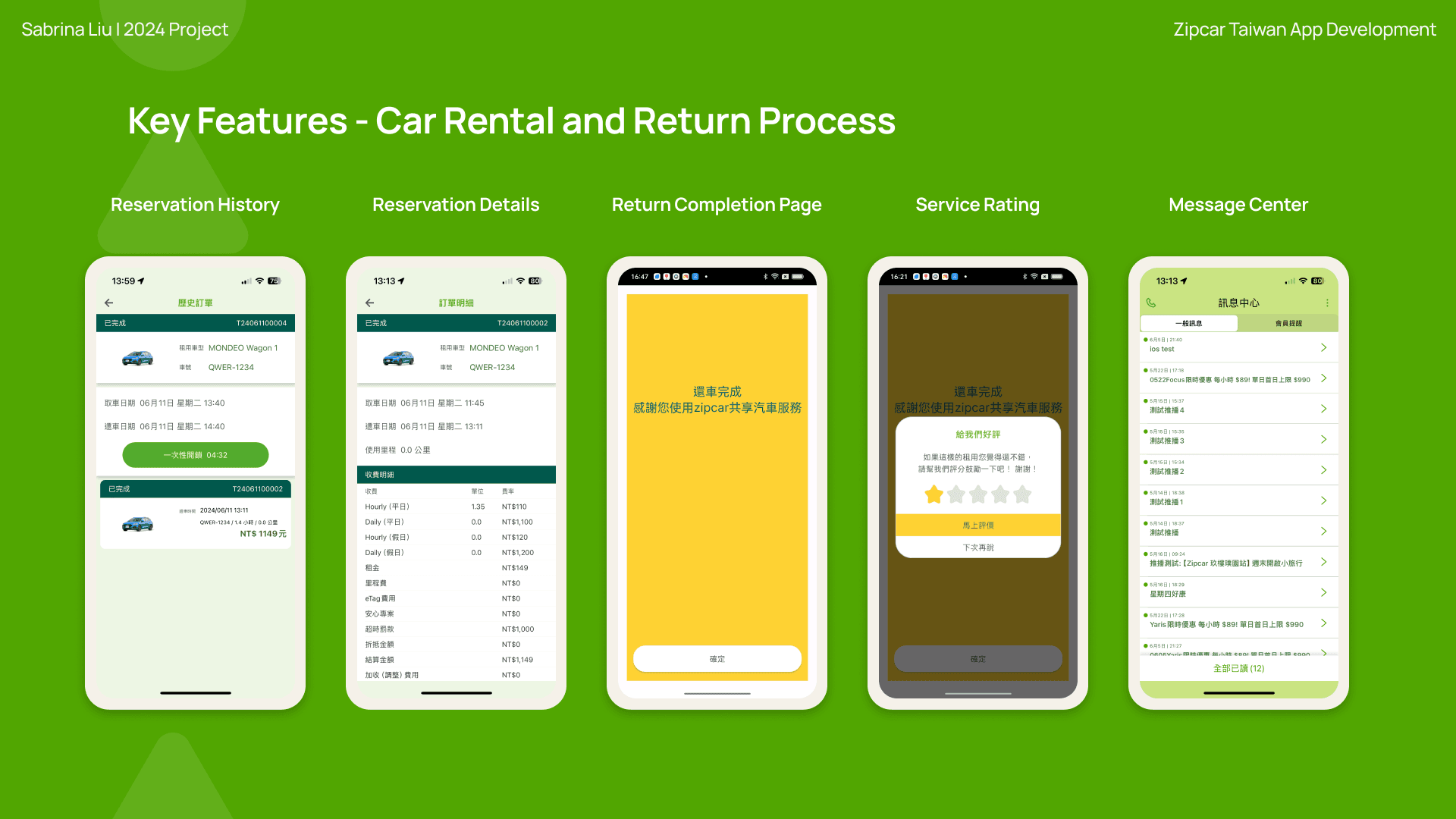
- ■Prioritize core functionalities such as user registration, vehicle search, booking, and payment systems.
Design
- ■Create Wireframes and Prototypes
- ■Develop high-fidelity prototypes in Figma
Develop
- ■Ensure compatibility with Both iOS and Android Platforms
- ■Front-End Development: including UI Implementation and Performance Optimization
- ■Communicate with Back-End about API and data management
(Beta) Testing
- ■Select a group of target users to test the app in real-world scenarios
- ■Prioritize changes and fixes based on user feedback and business goals
Launch
- ■App store submission and approval process
Planning
- ■Define project scope and objectives
- ■Initial meetings with clients to understand requirements
- ■Gather requirements and create project roadmap
- ■Prioritize core functionalities such as user registration, vehicle search, booking, and payment systems.
Design
- ■Create Wireframes and Prototypes
- ■Develop high-fidelity prototypes in Figma
Develop
- ■Ensure compatibility with Both iOS and Android Platforms
- ■Front-End Development: including UI Implementation and Performance Optimization
- ■Communicate with Back-End about API and data management
(Beta) Testing
- ■Select a group of target users to test the app in real-world scenarios
- ■Prioritize changes and fixes based on user feedback and business goals
Launch
- ■App store submission and approval process
Problem
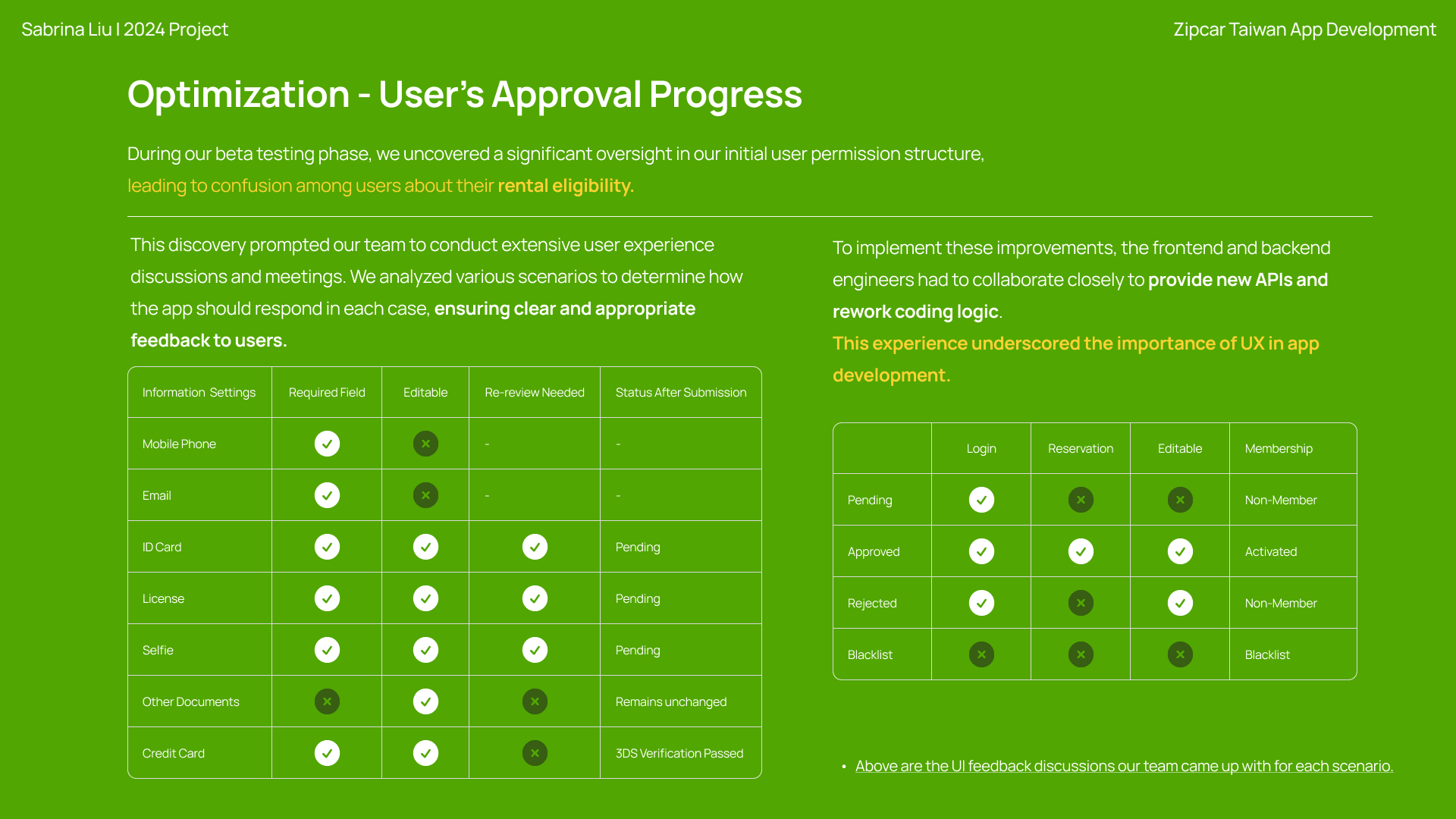
Approval Status Confusion
Users didn't understand their approval status during onboarding, causing failed booking attempts and high support inquiries.
PM Action: Facilitated a cross-functional workshop (PM + UX + FE + BE) to map every approval state. Rewrote API requirements and revised business logic so the UI always reflects real-time backend status.
Misleading Profile Edit Indicators
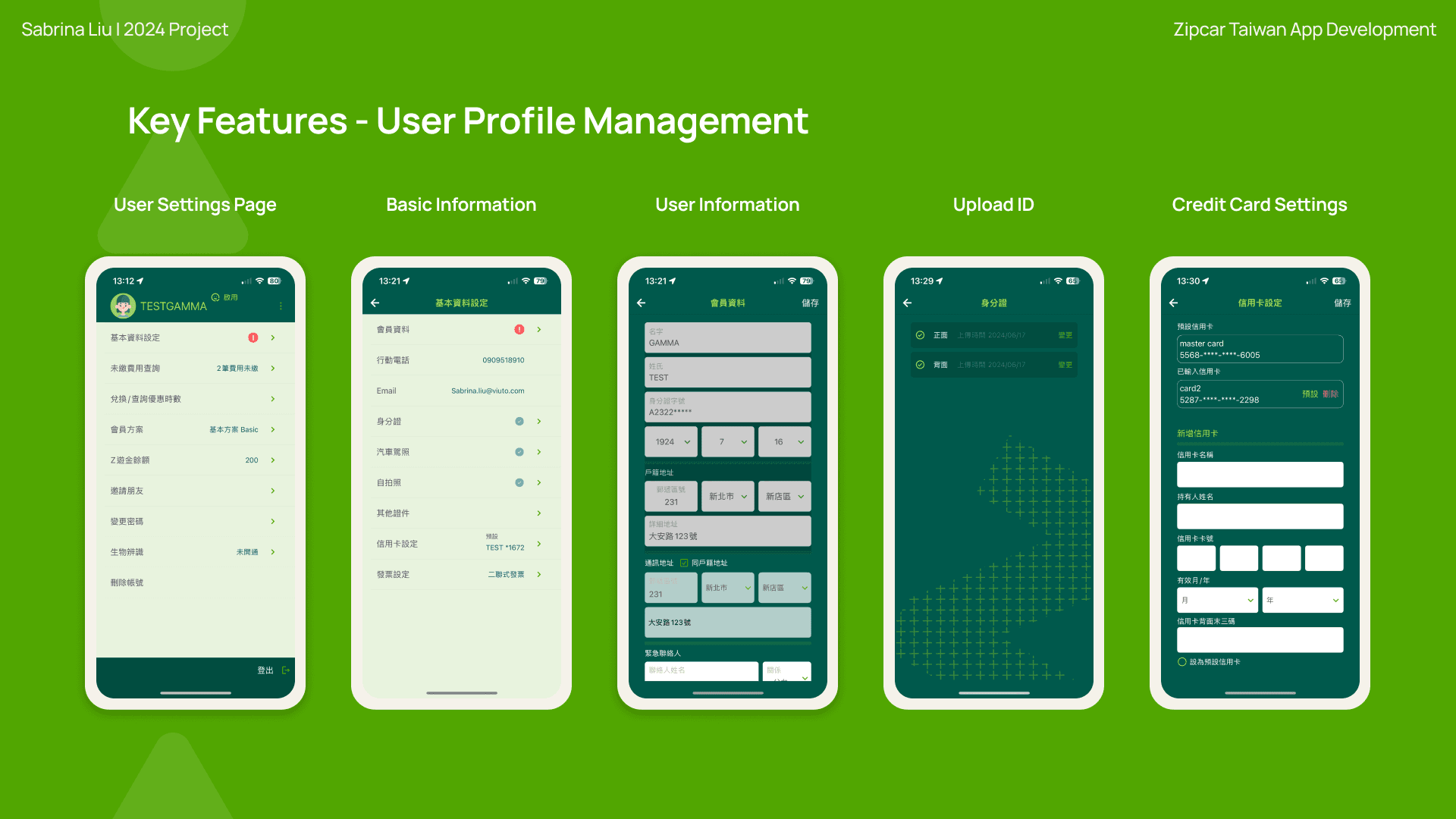
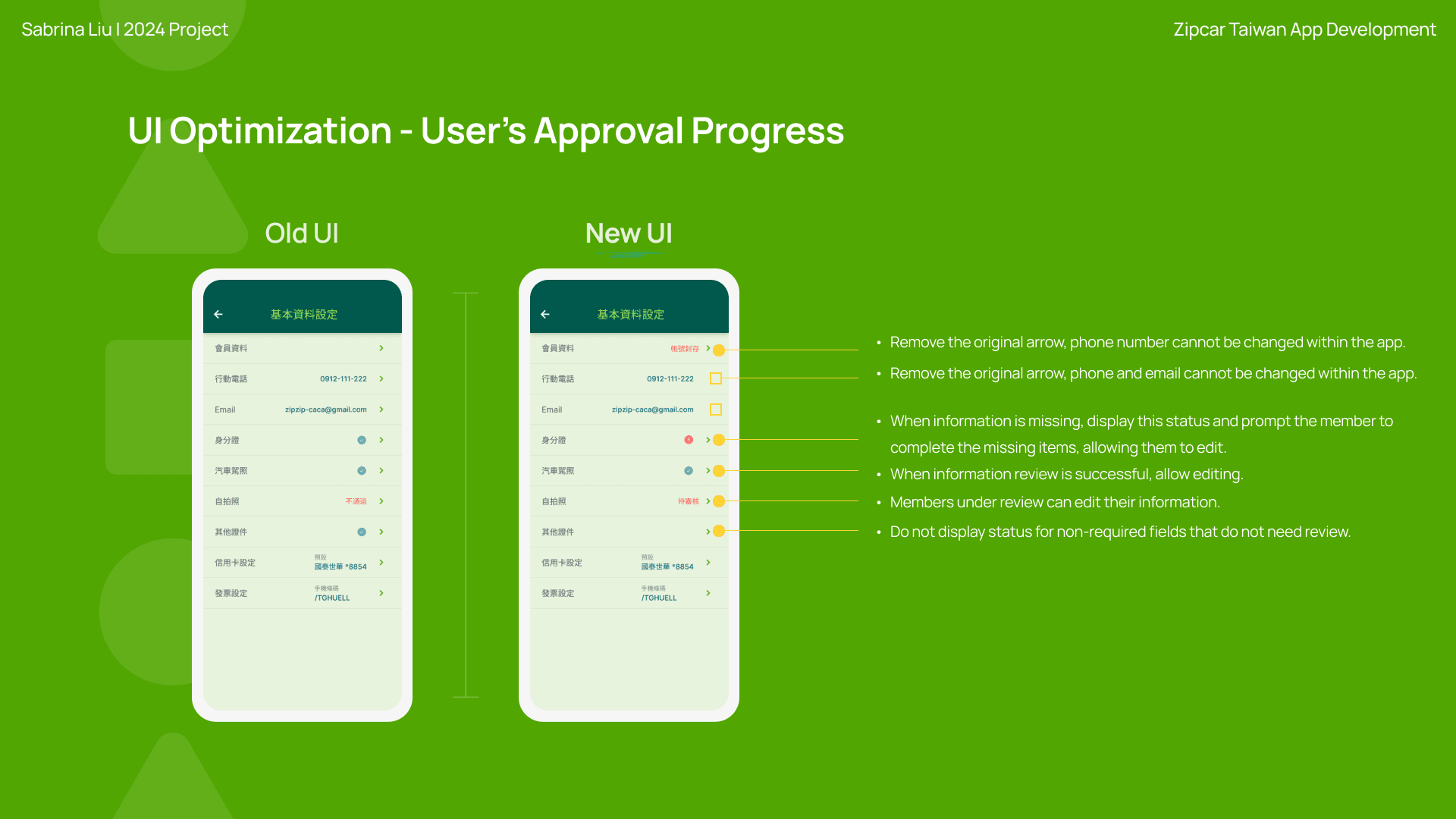
Profile page showed edit affordances for fields that couldn't actually be changed, eroding user trust.
PM Action: Audited all field-level permissions, coordinated UI spec update with design team. Rule established: show edit affordance only where editing is actually permitted.
Vehicle Access in Low-Signal Areas
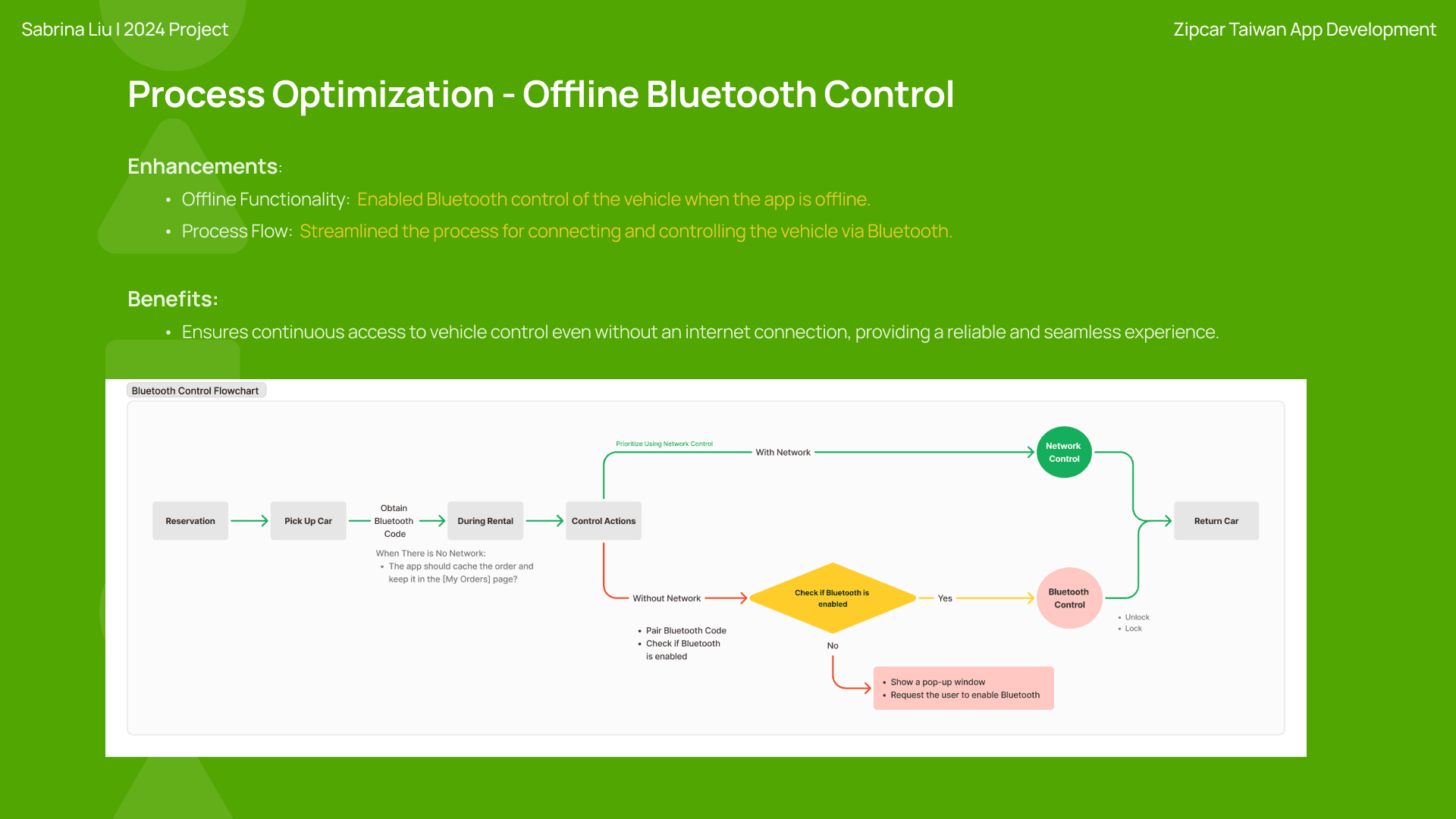
Vehicle access failed in low-signal areas (underground parking), creating anxiety at the most critical moment of the rental experience.
PM Action: Defined offline vs. online control logic. Aligned FE, BE, and hardware teams on Bluetooth authorization flow. Shipped an offline-capable unlock feature with streamlined pairing and clear system feedback states.
Process & Solution
Approval Status Transparency Facilitated a cross-functional workshop (PM + UX + FE + BE) to map every approval state. Rewrote API requirements and revised business logic so the UI always reflects real-time backend status.
Offline Bluetooth Vehicle Access Defined offline vs. online control logic. Aligned FE, BE, and hardware teams on Bluetooth authorization flow. Shipped an offline-capable unlock feature with clear system feedback states.
Profile Edit Permission Clarity Audited all field-level permissions, coordinated UI spec updates with the design team, and established clear rules: show edit affordance only where editing is actually permitted.
Impact & Metrics
Outcome
On-Time Launch
Delivered all major milestones within the 6-month Agile cycle, enabling the Zipcar Taiwan app launch and opening expansion discussions with Japan and Thailand teams.
Reduced User Friction
Improved onboarding flow and profile UX, significantly reducing user confusion and lowering customer support requests.
Reliable Core Feature
Shipped offline Bluetooth vehicle access- users can unlock vehicles even in underground parking with no signal.
Gallery